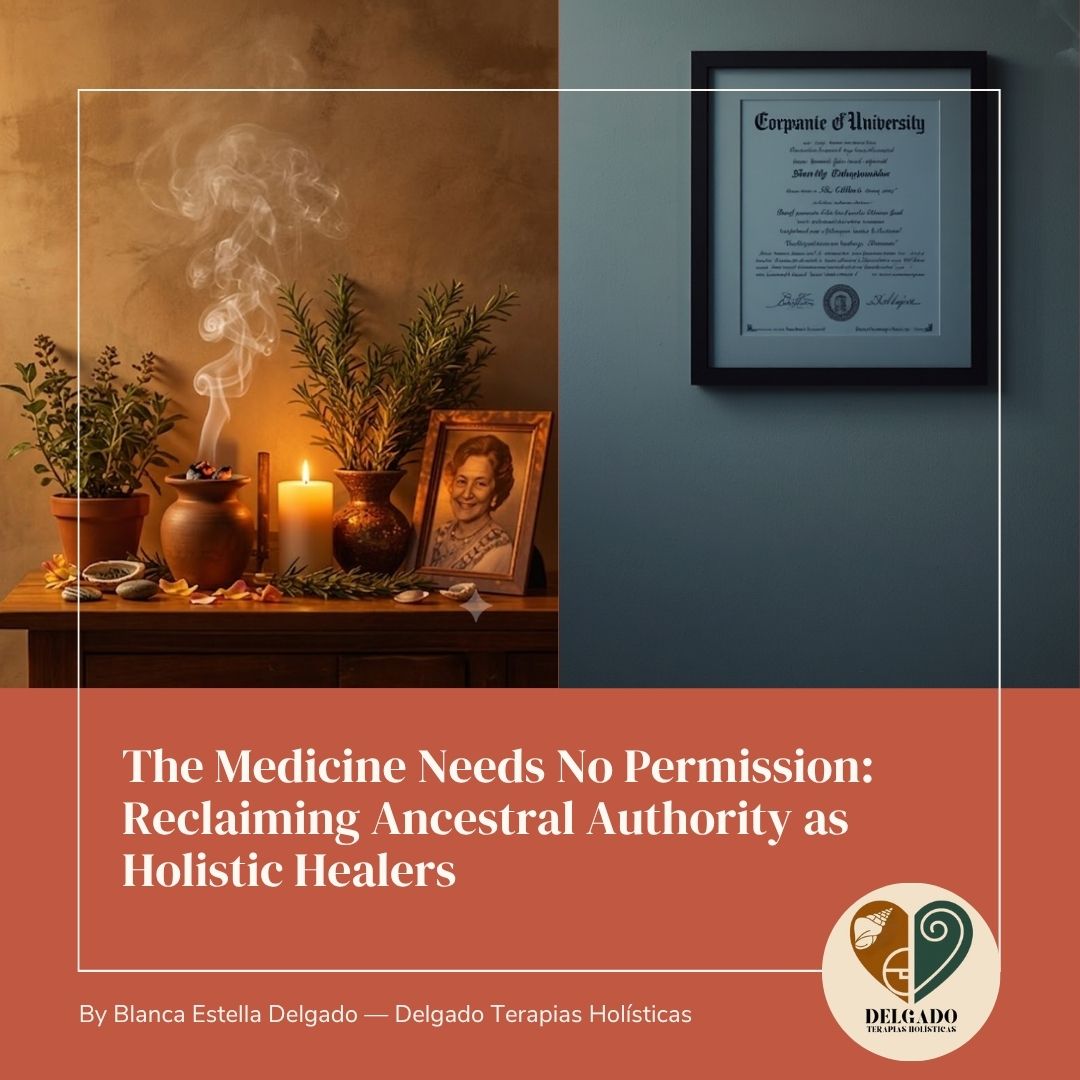
The Medicine Needs No Permission: Reclaiming Ancestral Authority as Holistic Healers
We live in a society that has conditioned us to question our own bodies, our intuition, and our ancestral wisdom. For generations, we have been taught that knowledge is only "real" if it carries an institutional seal—a diploma on the wall, a professional license, or the approval of a recognized authority. Somewhere along the way, we learned to believe that expertise always comes from outside ourselves.
This is one of the enduring legacies of colonization: the belief that only certain forms of knowledge deserve to be trusted.
Here in the Rio Grande Valley, many of us descend from communities that preserved their healing traditions despite centuries of displacement, discrimination, and attempts to erase Indigenous ways of knowing. Yet even today, many holistic practitioners quietly wonder whether they are "qualified enough" simply because their path looks different from the one society has elevated.
If you have ever felt yourself shrink in the presence of academic titles, questioned your calling while watching newly licensed professionals open their practices, or worried that your medicine somehow matters less because it cannot be measured by a standardized exam, this is your invitation to remember where your authority truly comes from.
1. Heal the Wound of Colonial Impostor Syndrome
There is an important distinction between legality and legitimacy.
Legality is established through laws, regulations, and licensing systems. These frameworks serve important purposes by protecting the public and defining professional responsibilities.
Legitimacy, however, is something much deeper. It is earned through integrity, wisdom, ethical practice, and the trust that develops when people's lives are genuinely transformed.
When you feel that you are somehow "less than" because you do not possess a particular degree or title, pause and ask yourself where that belief originated.
For many of us, it is not simply self-doubt. It is the lingering impact of generations taught that Indigenous knowledge, community wisdom, and traditional healing were inferior to Western institutions.
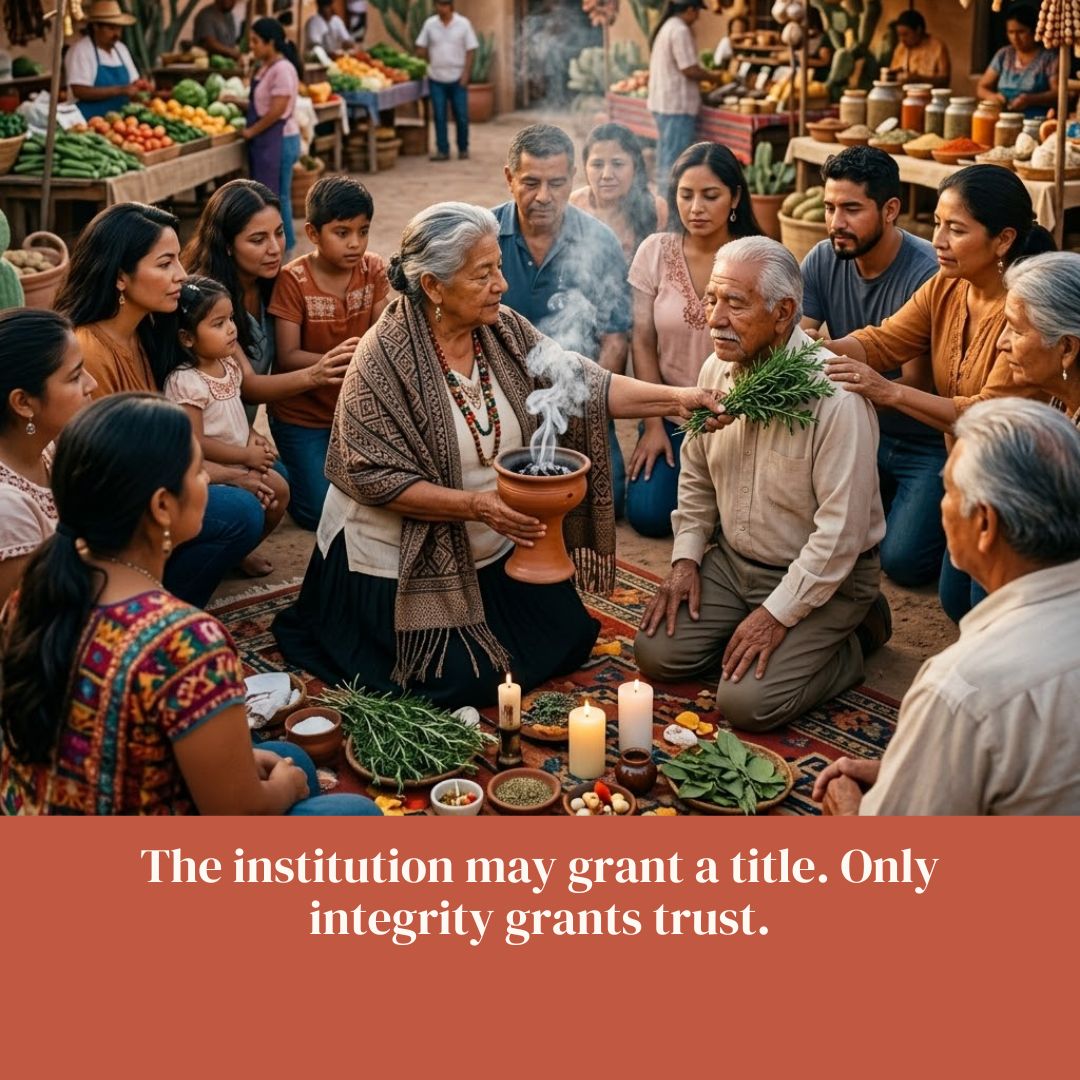
Traditional healing existed long before modern licensing systems were created. Its authority emerged through generations of observation, apprenticeship, ceremony, community trust, and lived results. The medicine survived because it worked, because communities protected it, and because each generation chose to carry it forward.
2. Our Lineage Is Our Authority
In Indigenous traditions, authority is rarely self-proclaimed.
It is inherited through responsibility.
Our teachers learned from their teachers.
Our abuelos learned from their abuelos.
Our grandmothers observed the cycles of birth, grief, illness, celebration, the plants, the seasons, and the rhythms of nature long before they ever guided another person. Their classrooms were kitchens, gardens, ceremonies, rivers, mountains, and the communities they lovingly served.
This wisdom was not preserved because it appeared in textbooks. It survived because each generation considered it sacred enough to protect, embody, and pass forward.
That is our lineage.
That is our authority.
Not because it is ancient.
But because it has been tested across countless human lives.
Every generation carries both the privilege and the responsibility of protecting the medicine without diluting its integrity. Authority is not power over others. Authority is accountability to those who came before us and responsibility toward those who will come after us.
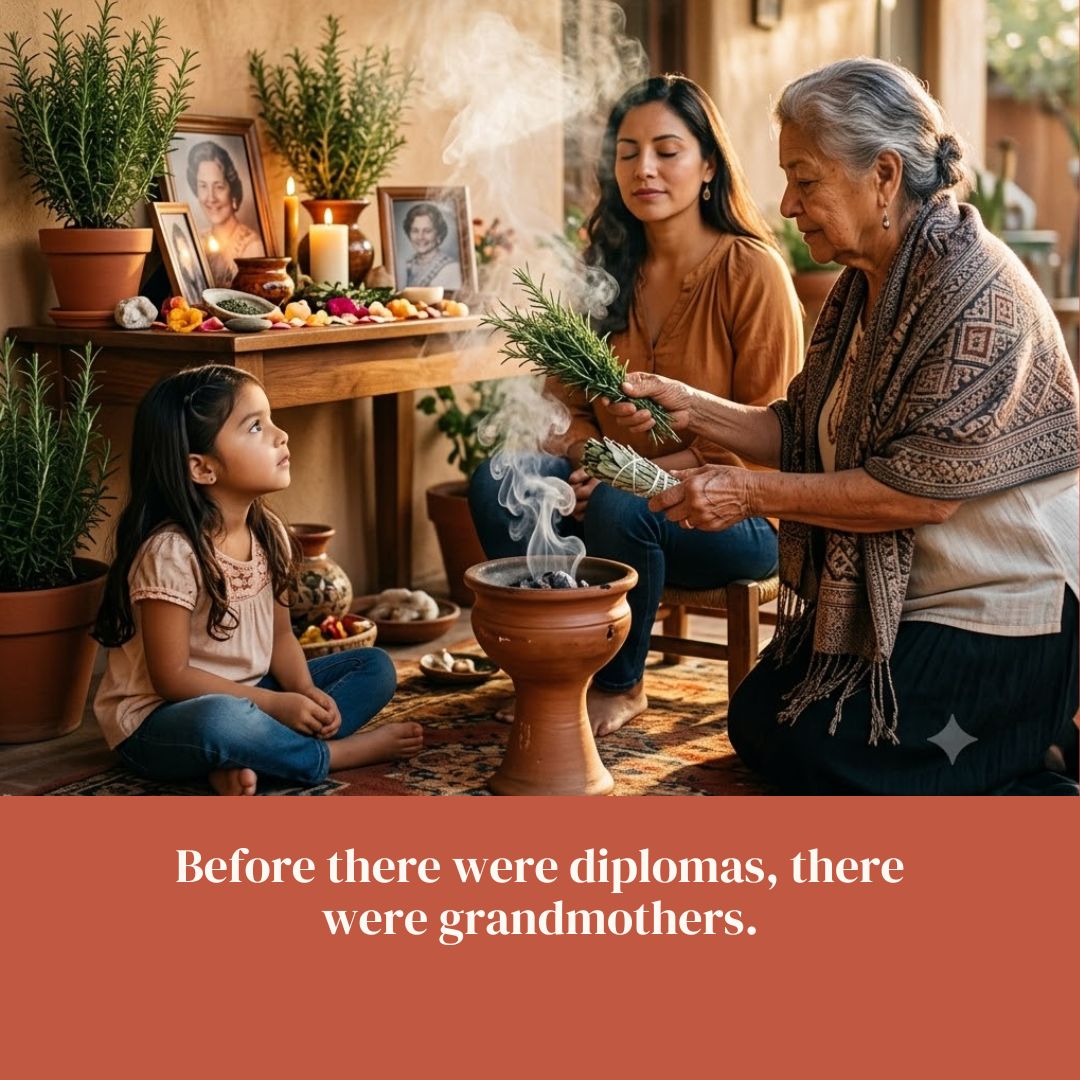
3. Stop Asking Institutions for Permission
Modern medicine and psychology have made remarkable contributions to human well-being. Many practitioners dedicate years of study to understanding the mind, body, and nervous system, and their work deserves respect.
Yet no single system holds a monopoly on healing.
Western clinical models often focus on diagnosing symptoms, treating pathology, and reducing distress. Holistic and ancestral traditions ask additional questions:
What story does the body carry?
What burdens were inherited across generations?
What emotional patterns continue repeating within the family?
How can ceremony, relationship, community, and spirit become part of healing?
These questions are not in opposition to science. They simply arise from a different worldview.
True decolonization does not require rejecting modern education. It asks us to recognize that wisdom has always existed in more than one place.
When we stop asking institutions to validate traditions they were never designed to understand, we free ourselves to practice with confidence, clarity, and humility.
4. Define and Honor Your Own Lane
Claiming your authority does not mean claiming to do everything.
It means becoming deeply rooted in what you are called to do.
As holistic practitioners, our work may include supporting emotional integration, facilitating ancestral healing, guiding ceremony, offering energy work, helping clients reconnect with their bodies, and creating spaces where stories can finally be spoken without shame.
Equally important is recognizing when another professional's expertise is needed.
Ethical practice includes collaboration, appropriate referrals, ongoing education, and honest recognition of our own limits.
Carrying ancestral medicine does not exempt us from accountability.
It asks even more of us.
We must continue learning.
Examine our own shadows.
Remain trauma-informed.
Practice within our competence.
Protect the integrity of the traditions entrusted to us.
The medicine is not ours to own.
It is ours to steward.
5. The Path Walked Matters More Than the Paper on the Wall
A degree represents years of disciplined study and can provide invaluable knowledge.
But no diploma alone can confer empathy.
No license automatically teaches humility.
No examination can measure discernment, spiritual maturity, or the ability to sit compassionately beside another human being's suffering.
Likewise, lineage alone is not enough.
Our ancestors remind us that wisdom requires practice, integrity, and continual refinement.
The healers most remembered in our communities were not those with the longest list of credentials. They were those whose lives reflected compassion, consistency, humility, and service.
Their authority came from living their medicine every day.
Healing Has More Than One Teacher
This is not an argument against science or professional education.
Many holistic practitioners pursue formal training, collaborate with licensed professionals, and continue expanding their knowledge throughout their lives.
Healing is not a competition between ancestral wisdom and modern knowledge.
It is an invitation to recognize that human beings have always learned through many teachers: observation, community, nature, spirit, scholarship, experience, and relationship.
Each has something valuable to offer.
Remember Where Your Authority Comes From
The medicine you carry was never meant to compete with a diploma, nor should it seek validation from systems that were not designed to recognize it. Its roots reach far deeper.
Remember the hands that prepared the herbs before yours.
Remember the prayers whispered in kitchens, fields, and ceremonies.
Remember the grandmothers who healed without recognition and the grandfathers who carried wisdom without titles.
Their knowledge endured because every generation accepted the sacred responsibility to protect it, embody it, and pass it forward with integrity.
Walk your path with humility.
Continue learning.
Honor ethical boundaries.
Collaborate when appropriate.
Refer when someone else's expertise is needed.
Let your practice be shaped by compassion, accountability, and reverence for both your ancestors and those who seek your guidance.
The institution may grant a title.
Only integrity grants trust.
Your lineage is your authority.
Your responsibility is to honor it well.