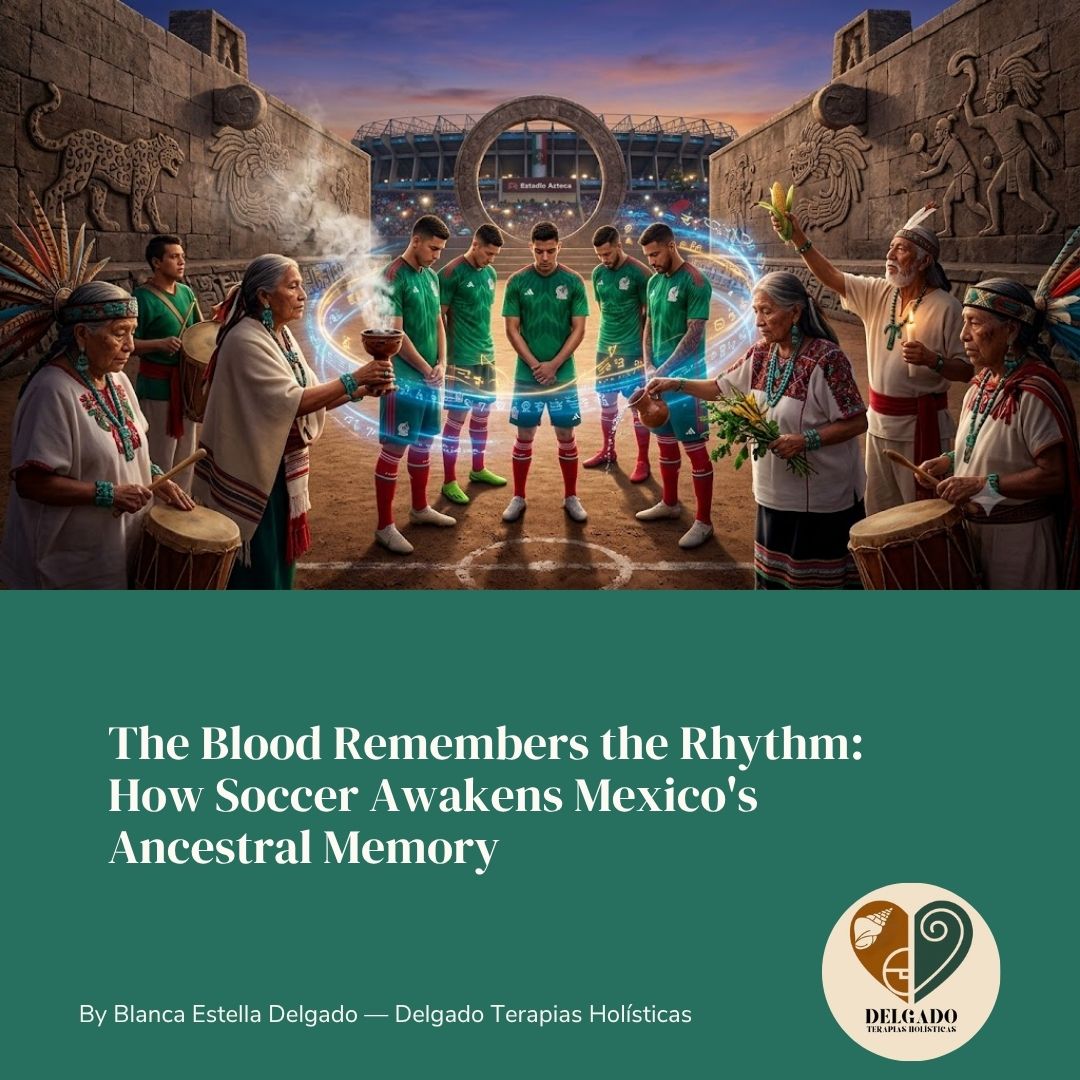
The Blood Remembers the Rhythm: How Soccer Awakens Mexico's Ancestral Memory
Beneath the roar of social media, another sound is rose—quieter, older, and impossible to ignore. If you listened closely, it didn't sound like a stadium chant. It sounded like a heartbeat.
Whenever Mexico steps onto the world's biggest stage, something remarkable happens.
It has happened across eighteen FIFA World Cup tournaments. It has happened through unforgettable victories, heartbreaking defeats, impossible comebacks, and painful eliminations. Each generation remembers a different match, yet somehow the feeling is always the same.
For a few sacred hours, millions of people scattered across cities, towns, and continents remember that they belong to something larger than themselves.
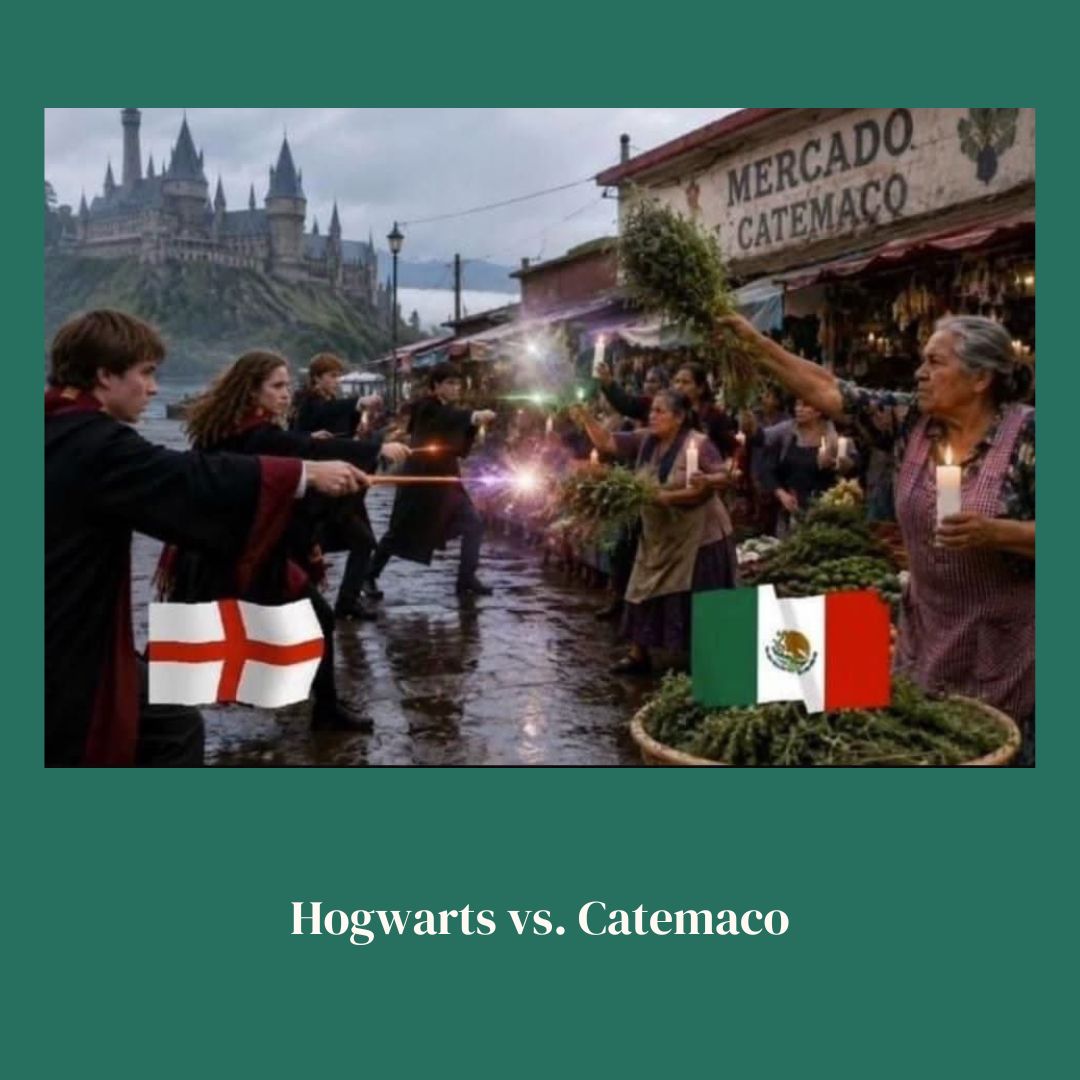
As the Mexican National Team faced England in a rain-soaked, electrifying Round of 16 World Cup match at the Estadio Azteca, the internet erupted into a brilliant, hilarious, and surprisingly profound cultural moment. Memes declared the match "Hogwarts vs. Catemaco,""Moctezuma vs. King Arthur,"” The National Museum of Anthropology vs The British Museum.” On one side stood England, representing the polished, institutionalized version of magic familiar through books and film. On the other stood Mexico, embraced through the earthy mysticism of Catemaco, the healing traditions of Veracruz, and the enduring spirituality of Indigenous ancestors.
When the final whistle sounded, the scoreboard read 3–2 in England's favor. Mexico's tournament had ended.
But something else had awakened.
Not because Mexico lost.
And not only because Mexico has won unforgettable victories in the past.
Rather, because every World Cup reminds us that beneath the jersey, beneath the anthem, and beneath the competition lives something much older than soccer itself.
Every four years, the blood remembers the rhythm.
The Awakening of the Huehuetl
Perhaps this is why the World Cup stirs such deep emotion for so many Mexican families. It isn't only about soccer. It is about memory.
For centuries, many Indigenous healing traditions—including Mexica ceremonial practices, limpias, and ancestral rituals—were driven into the shadows. During colonization, many sacred customs were dismissed as superstition, witchcraft, or fear. Yet families, elders, and medicine keepers quietly safeguarded this wisdom, passing it from generation to generation until a new time of remembrance could arrive.
They did not disappear.
They survived.
Today, those seeds continue to break through the concrete.
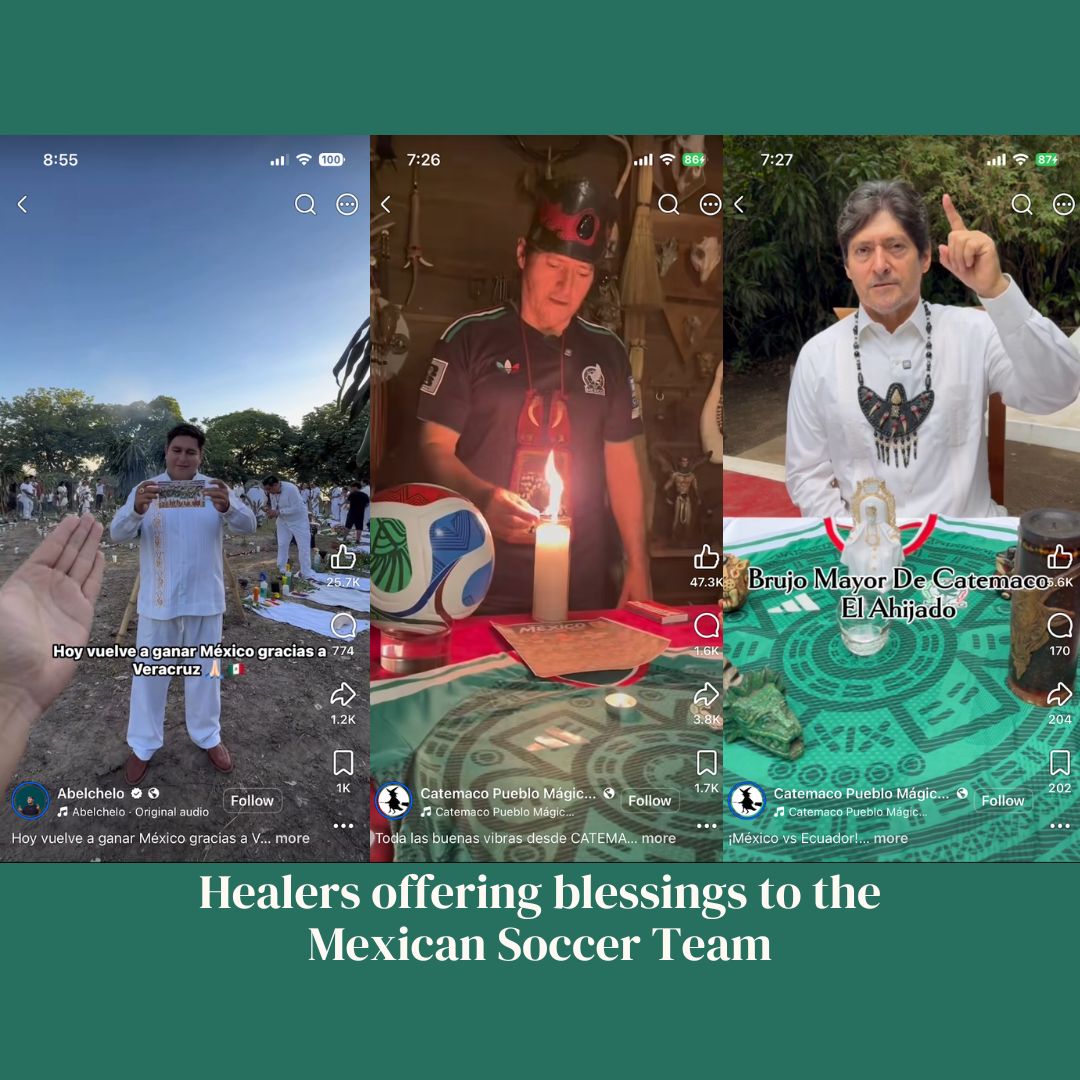
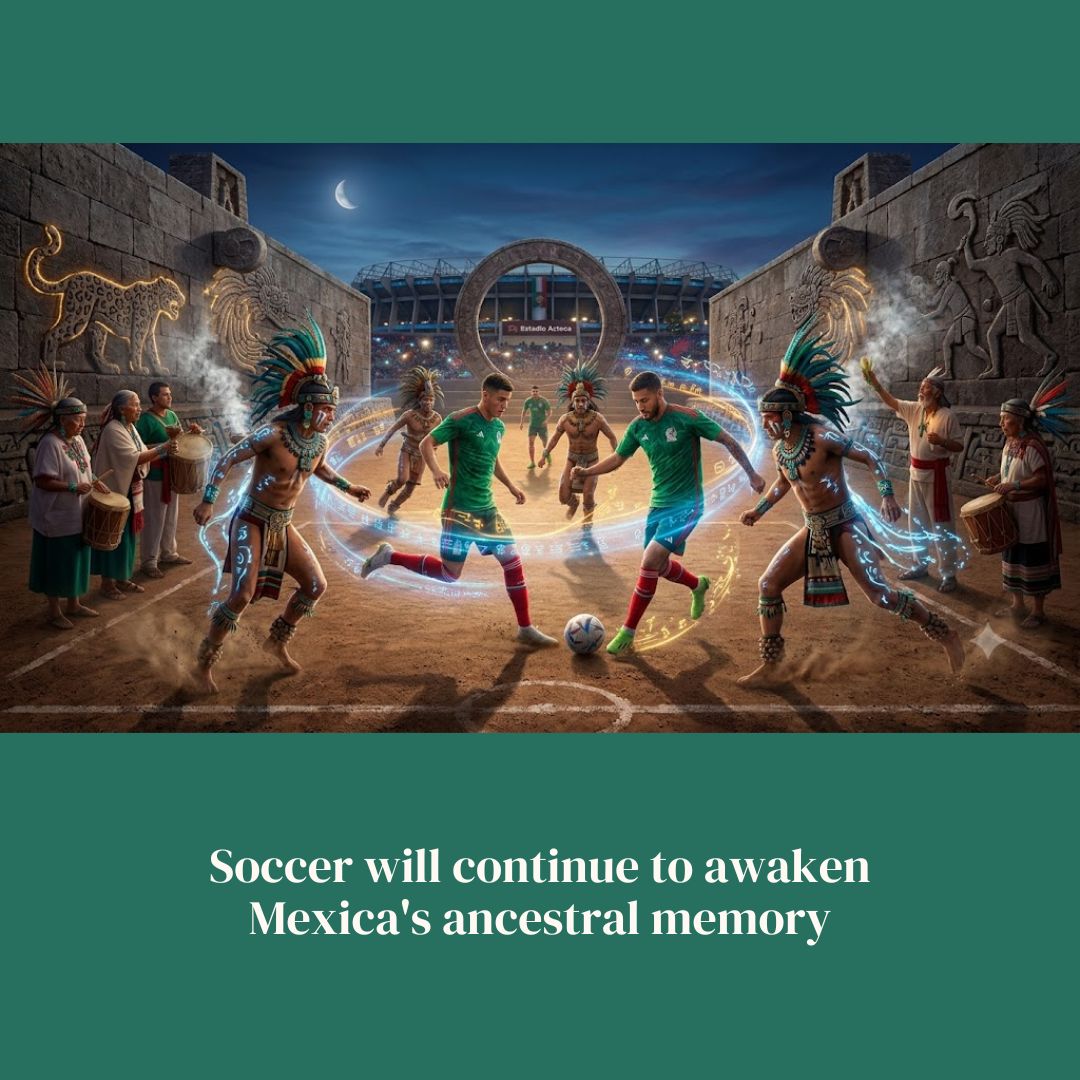
Across our screens, we witnessed far more than tactical analyses and match highlights. We saw ceremonial healers offering blessings over jerseys. We saw dancers honoring ancient traditions outside the stadium beneath the gray skies of Mexico City. We heard the deep, resonant pulse of the huehuetl—the traditional Mexica ceremonial drum—echoing through videos and celebrations.
For many people, something stirred deep within. It felt less like discovering something new and more like remembering something that had always been there.
Every World Cup becomes another opportunity to remember—not only who we cheer for, but who we come from.
From Shadows to the Stadium
Perhaps the most beautiful part of this moment was not the ceremony itself, but the response it received.
Years ago, seeing an Indigenous healer blessing a national sports team might have been met with ridicule or skepticism. Many respond with curiosity, celebration, and pride. Practices that once had to remain hidden were welcomed into public view—not as relics of the past, but as living traditions that continue to offer meaning, healing, and connection.
When England took an early lead, the spirit inside the Azteca never faded. Mexico answered with remarkable goals from Julián Quiñones and Raúl Jiménez, reminding the world that resilience has always been woven into our story.
Although the tournament ended, the stadium never lost its voice. It roared with hope, dignity, and love for the people wearing the green jersey.
For a brief moment, millions of people across Mexico and throughout the diaspora shared something larger than sport. They shared a profound sense of belonging.
We Were Never "Discovered"
This wasn't simply a viral trend.
It was a remembrance.
A growing number of people are reclaiming the understanding that our ancestors cultivated sophisticated knowledge of astronomy, mathematics, agriculture, medicine, philosophy, and spirituality long before colonization attempted to erase those contributions.
When one young fan said, "This is more than a game—it's life," she captured something many of us felt but struggled to explain.
Sometimes our hearts recognize what our minds are only beginning to understand.
Perhaps that is why so many people become emotional during these matches. The body often remembers before the mind does.
Beneath generations of migration, survival, silence, and sacrifice lives an ancestral rhythm that still calls us home.
Remembering Is Also Healing
Moments like these remind us that healing is not only personal—it is collective.
Many of us carry inherited stories of resilience alongside inherited wounds. We may unknowingly hold patterns of fear, shame, silence, or emotional burdens passed through generations. Transgenerational healing invites us to honor those who came before us while gently releasing what no longer needs to be carried.
In many Indigenous traditions, a limpia is not about superstition or fear. It is a ceremony of cleansing, prayer, and intention—a sacred way of releasing emotional heaviness, restoring balance, and reconnecting with Spirit. Like many ancestral practices, its deepest purpose has always been healing.
Perhaps what moves us during these matches isn't only national pride.
Perhaps it is the recognition that our ancestors are not confined to history books. They continue to live through our stories, our ceremonies, our resilience, and our capacity to remember who we are.
England advances.
Mexico's tournament comes to an end.
That is the nature of sport.
But every four years, something far more enduring takes place.
Children heard the drums and asked questions about their heritage.
Grandparents tell stories of World Cups long before this one.
Families gather around tables, wearing the same green jersey across generations.
The diaspora remembers home.
For a few extraordinary weeks, we remember that we are more than spectators. We are descendants. We are carriers of memory. We belong to a story that began long before the first World Cup and will continue long after the final whistle.
That is why soccer continues to awaken Mexico's ancestral memory.
Not because we always win.
Not because we never lose.
But because every time El Tri takes the field, something ancient rises with them.
The blood remembers the rhythm.
And perhaps... so do we.
A Reflection
If this story stirred something within you, consider sitting with these questions:
What traditions did your grandparents carry that were never fully explained?
What emotional burdens may have been passed through your family?
What parts of yourself were taught to hide?
What wisdom is waiting beneath generations of survival?
Sometimes healing begins not by learning something new, but by remembering what has always lived within us.
If you feel called to explore your own ancestral path, ceremonial limpias and transgenerational healing can offer a gentle space to reconnect with your roots, release inherited emotional burdens, and honor the wisdom carried by those who came before you.
The blood remembers.
Sometimes all we need is permission to listen.